An Ancient Oak's Legacy
By Amy Porter, Director of Conservation
Published in Wolf Tracks vol. 42 no. IV
Winter 2025-2026

This time of year, a crispness settles over the prairie and oak woodland at Wolf Haven. Atop the grandfather tree, two red-tailed hawks perch quietly, sentinels asking us to pause and take notice. Below them, the woods are filled with the lively chatter of chickadees, kinglets, and red-breasted nuthatches, while spotted towhees make a ruckus tossing fallen leaves in search of seeds and insects. Dense mats of moss and lichen festoon the bare branches, and dew-beaded spiderwebs shimmer like threads adorned by crystals.
Out on the prairie, the vibrant blooms of spring and summer have faded into soft golds and browns, and the landscape appears sleepy. Yet beneath the surface – particularly within this year’s prescribed burn footprint – a quiet transformation is underway. Following the burn and before the arrival of fall rains, our partners at the Center for Natural Lands Management (CNLM) seeded the area with 17,755 grams of native wildflowers from 33 species and planted 1,666 plugs from five species. The nutrient-rich soil left behind by the fire absorbs sunlight and warms the ground, creating ideal conditions for an unseen alchemy of moisture, heat, and light that are allowing these seeds to begin their biochemical transition from dormancy to germination.
This work with native species connects closely to another effort happening nearby: safeguarding the heritage of the renowned Davis Meeker Garry oak. Estimated to be more than 400 years old, this ancient oak stands beside Old Highway 99 in Tumwater near the Olympia Airport. It once served as a landmark for settlers along the Oregon Trail, and before that, for Native peoples traveling the Cowlitz Trail.

Back in 2023, a proposal was put forward to remove the Davis Meeker oak, citing safety concerns from a large limb that had fallen. However, it was argued the safety concerns could easily be mitigated. Multiple expert assessments by arborists confirmed the tree is healthy, aside from a few large dead branches typical of a Garry oak of its age and stature. The assessment found that the risk level was only moderate and could be easily reduced to low risk with selective pruning and a good support system.

The push to remove the tree was further argued to not be legitimately connected to safety concerns, but rather to accommodate the potential expansion of the Olympia Airport. Because of the tree’s historical significance, there was momentous public backlash – including from local tribal members and preservation advocates. The Olympia community rallied to protect the oak, and for now, the city is moving forward with regular maintenance and monitoring, not removal.
However, given the uncertainty regarding future proposals for removal, the City of Tumwater carefully collected a cluster of seedlings growing at the base of the oak to share with partners across Thurston County working to restore oak woodland and prairie habitats. Wolf Haven’s involvement began during a community meeting where we shared an update about our newly established oak woodland trail. After the meeting, Tumwater’s Parks and Recreation Director approached us about hosting some of the salvaged seedlings. We immediately said yes – grateful for the chance to help steward a living piece of regional history.
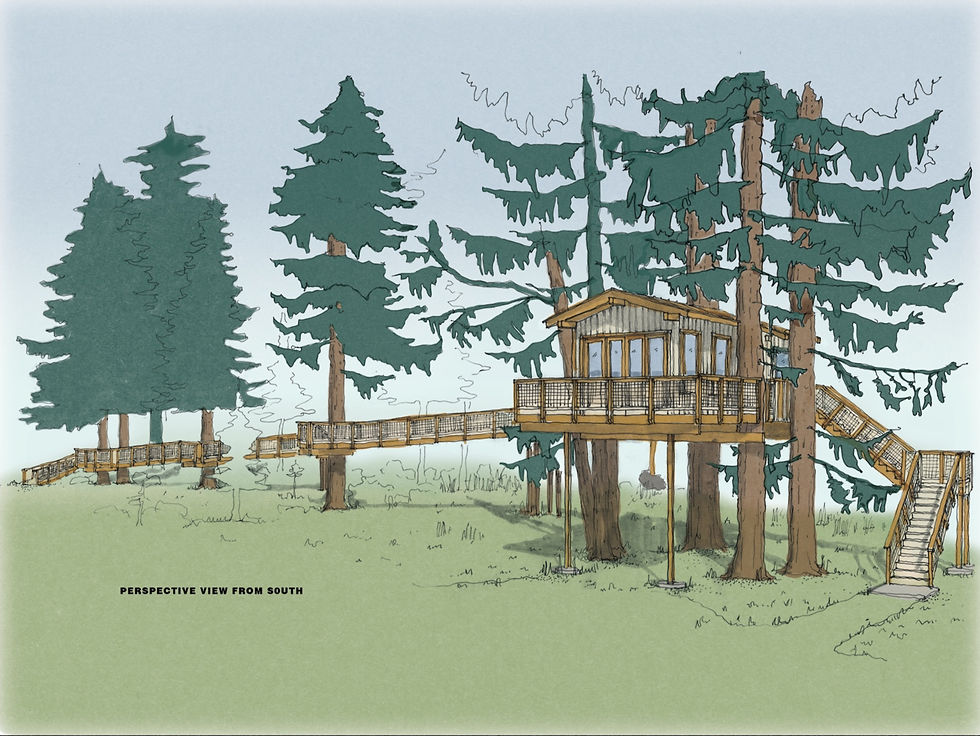
Wolf Haven was entrusted with 18 starts. After thoughtful planning, we identified several locations on our prairie where they would have a strong chance to grow and mature. Three were planted in our wolf cemetery, three near our future treehouse site, and the remainder with other established oaks near our bat boxes. As these young trees settle into their new home, our next step will be to install a commemorative plaque as an acknowledgment of the oak’s deep historical and cultural significance, the community’s effort that protected it, and the hopeful new generation beginning its own centuries-long journey.