
Wolf Haven's Philosophy of Care: Feeding the Wolves
By Judah Jamison, Lead Animal Care Specialist & SAFE American Red Wolf Liaison
As a sanctuary, our philosophy is to provide the highest quality of care and do as little harm as possible. This extends, first and foremost, to our sanctuary residents, for whom we work tirelessly to continue to elevate their quality of life. Our philosophy of care also extends to the myriad of wildlife who share our 86-acre property. In practice, this means we cede the space needed by other wild species to nest and thrive, even when it’s potentially inconvenient to us humans.

The recent discovery of a rat’s winter nest under a wooden structure we had planned to move, for example, means waiting until spring to avoid disturbing their cozy, cold-weather hideaway. We are careful to avoid large vegetation removal projects in months when birds are raising their chicks. Trees in danger of falling are often cut into snags to continue to support cavity nesting birds and squirrels. We prevent hornets from colonizing areas that could pose risks to canids or humans by using decoy nests that deter them from settling in those areas – rather than exterminating – whenever possible. We keep our thawing meat sealed and our work areas clean so as to not draw rodents or insects.

Our philosophy of care also extends to how we feed the wolves. Feeding 40 carnivores who individually consume 10-15 pounds of meat per week is no easy feat in itself, but feeding in a way that causes the least amount of harm creates additional logistical challenges that ignite our creativity. Regardless of our individual human dietary choices and philosophies, there can be no argument that meat production takes lives and creates complex waste management problems. There is plenty of usable meat that goes uneaten by humans but is perfectly & nutritiously ideal for the wolves!
One of the main ways Wolf Haven reduces the environmental and ethical impacts of feeding our canid residents is picking up community-reported roadkill deer and elk, and partnering with local hunters to utilize their post-butchering carcasses. We also purchase post-butchering scrap meat, organs, and bones from a family butcher shop that we’ve had a long-standing vital relationship with. Over the years, we have received thousands of pounds of meat from grocery stores, food banks, and food warehouses that have experienced freezer failures, which prevents that meat from going into the landfill. Local Native American tribes have donated excess salmon, and we have even received the fish thrown at Pike Place Fish Market to wow tourists in the past. Local citizens donate meat from their freezers that is too old or freezer-burned for their taste. We even have one faithful community member who volunteers her time to go around her community and pick up this unwanted meat to bring to us!


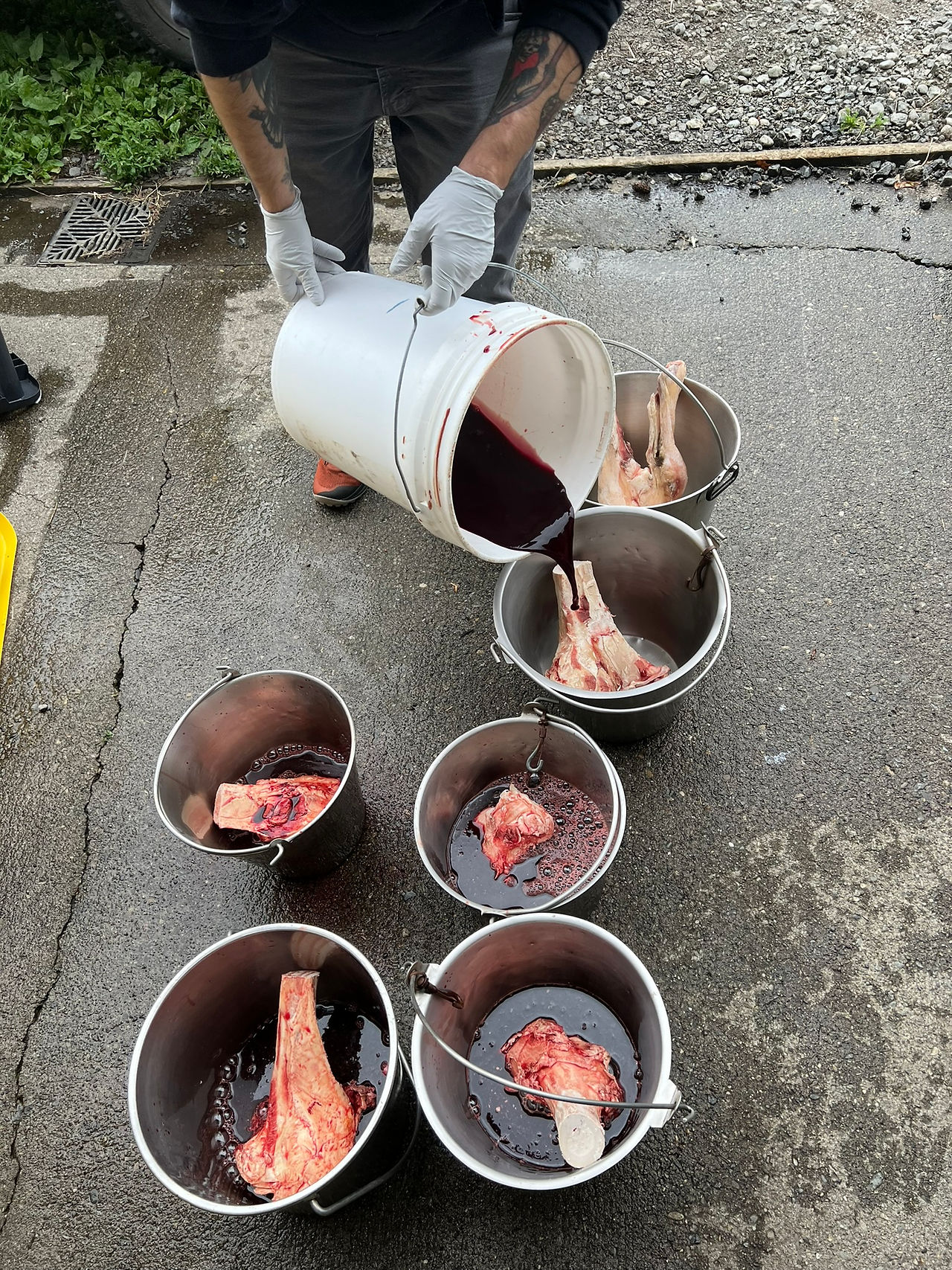
The careful use of food doesn't stop once we receive it. Animal care staff utilize every usable bit – saving blood to make popsicles and creatively freezing smaller pieces of scrap meat together to make larger blocks that are easily carried by the wolves and kept safe from thieving hopefuls (jays, ravens, eagles, and hawks). Wolf Haven is proud to operate under this important philosophy of care and continue to elevate our standards organization-wide.

If reading this has inspired you to donate unwanted meat items, you can review our meat donation guidelines to see what we accept at this time. To report deer or elk roadkill in the direct vicinity of Wolf Haven (a maximum of 30 minutes pick-up distance in most cases), please leave a message on our dedicated line, 360.264.4695 x226


