Wildlife Movement is Stifled Across the West…What is Wolf Haven Doing About It?
Updated: Aug 11
By Elly Gore, Seasonal McCleery Ranch Facilities & Animal Care Associate

When you think of the desert, what comes to mind? Is it the scorching sun and a dry throat? Sunburns and headaches? Vast horizons of dust and prickly cacti with no water to be found? That’s the version of the desert most humans are familiar with, and because of that, it’s easy to assume deserts are relatively unimportant to wildlife and conservation. However, there are many species that have evolved to survive and thrive in desert conditions, and most deserts are brimming with life!
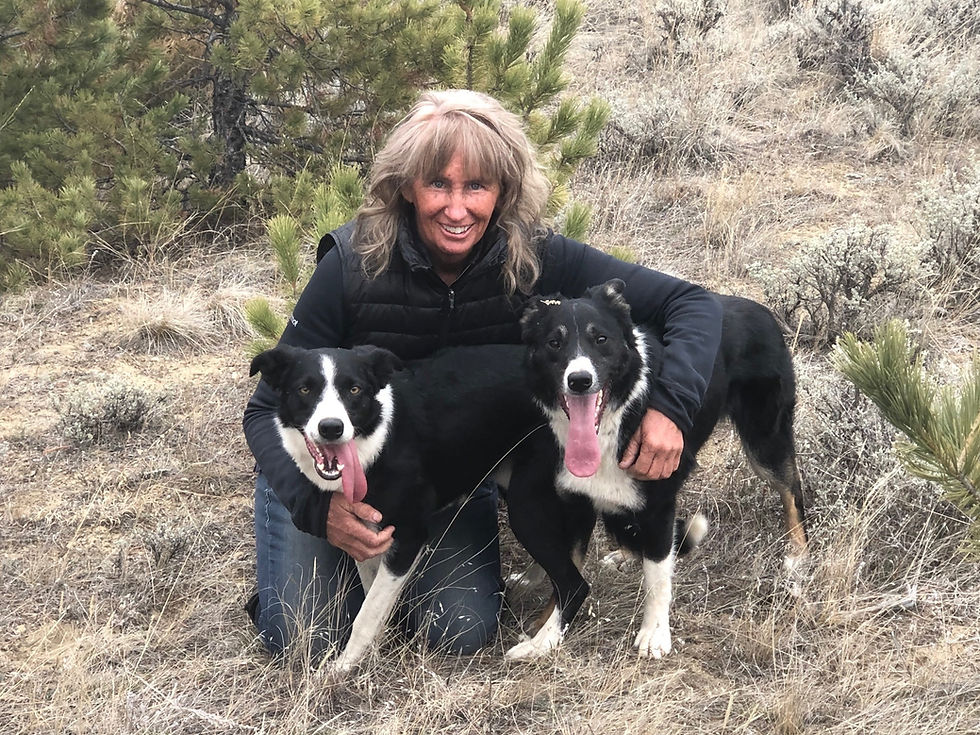
Wolf Haven’s satellite sanctuary, McCleery Ranch, is nestled in a patch of hardy limber pines surrounded by thriving sagebrush, cacti, and grasses. Neighbors are far and few between, and as I repaired a gate here in the surprisingly gentle morning sunshine, I felt I could forget that anyone or anything else in the world existed at all. My only visitors were passing mule deer and a cottontail rabbit, and I sang with ravens and meadowlarks while clearing grouse scat from my working area. I had to keep an ear out for rattlesnakes and beware of my own clumsiness with a hammer, but otherwise, my mind and soul were at peace here in this lively desert sanctuary.
And sanctuary it is - not just for the wolves living here, but also for the sage, the grasses, the limber pines, and the many other species that rely upon them throughout the year. McCleery Ranch spans just over three hundred acres that haven’t been used for livestock grazing in decades. Most of the land is the closest thing to pristine sagebrush steppe habitat we can hope for in modern times. This specific habitat is important to over 350 species of conservation concern, which is rapidly disappearing due to overgrazing, oil and gas leasing, climate stress, and fragmentation due to roads and other human infrastructure.
Habitat fragmentation is the dividing and breaking apart of habitat types and resources which were once continuous and easy for wildlife to pass through. On a map, it may look like a neat patchwork quilt in some areas, or more akin to a shattered glass pane in others, depending on the cause. The following satellite images show the effects of deforestation in the Amazon; this habitat fragmentation is the most easily visible, but the effects can be just as dire across the globe.


Fragmentation interrupts animal migration routes and cuts populations off from each other, which often leads to decreased animal health and further population declines due to inbreeding and resource limitations. Conservationists are working to combat fragmentation by creating or maintaining connectivity via travel corridors between larger sections of habitat. You may have heard of wildlife crossings over highways, which are amazing examples of direct ways humans are increasing connectivity for wildlife. However, there are many other ways to create connectivity, one of which is maintaining smaller pockets of healthy habitat, like McCleery Ranch, between larger ones, like the wilderness and public lands on nearby mountain ranges.
Roads and fence lines are perhaps the most obvious barriers to connectivity in rural Montana, as both require animals to alter their travel patterns and often cause injuries and fatalities. But animals who successfully navigate human infrastructure still need a healthy habitat with food and shelter to survive their journey… and human land use often reduces access to habitat and resources alike. For example, different land use practices have altered neighboring lands to look entirely different from Wolf Haven’s McCleery Ranch. The intact “sagebrush sea” that makes up the plant composition of the ranch is critical for elk, mule deer, and pronghorn during winter months. These species depend on woody browse to tide them over through cold winter conditions until the ground is alive once again with lush forbs, grasses, and other green vegetation. Furthermore, critically endangered greater sage grouse depend on thick sagebrush “forests” to establish and surround safe breeding grounds, otherwise known as leks.

There are always smaller creatures dwelling in our abundant sage: look closely and you’ll find an assortment of cottontail rabbit scat, along with vole and snake burrows, and coyote tracks in the dust. Listen, and you’ll hear the vibrant chorus of black-billed magpies, ravens, meadowlarks, Say’s phoebes, rock wrens, and countless crickets and cicadas. There are several species of conservation concern that have been detected on the ranch, like greater sage grouse, sage thrashers, greater horned lizards, and Brewer’s sparrows. Even those species of less concern are affected by fragmentation, such as our local resident mule deer population, which has declined by 75% since the 1970s due to disease and connectivity restraints. All of these species play a special role in the amazing ecosystem of this desert. It is therefore necessary for us to maintain healthy and accessible habitat for the continued survival and migration of wildlife.

In an effort to maintain and enhance the beautiful habitat here at McCleery Ranch, we have been working toward upgrading our fence lines for improved wildlife passage by following the Mule Deer Foundation’s Wildlife Friendly Fencing guidelines (see diagram below) for the two-mile stretch of four-strand barbed wire fence that surrounds the building complex and sanctuary. This is a very large undertaking, and has also included removing over half a mile of old, decommissioned barbed wire fence that was no longer in use.
To make traditional barbed wire fencing more permeable to wildlife, a handful of changes must be made. Mule deer are known to entangle their back legs in the top two wires, so the spacing between them must be increased. Pronghorn prefer to cross under fences and avoid jumping, so we are replacing our lowest barbed wire with smooth wire to reduce snagging and injury, and raising it to the recommended height of 16 inches. Additionally, we hope to install reflectors on our top wire to make it more visible to larger game birds who often become entangled during takeoff. Sage grouse are especially known for flushing from the brush and entangling themselves in the top wires. By adjusting the spacing of wires, replacing the bottom strand with smooth wire, and enhancing visibility, we can create a fence that facilitates wildlife passage while fulfilling its purpose of keeping neighboring livestock off our sanctuary grounds.

Although deserts may not be every human’s ideal environment, they are undoubtedly beautiful and vibrant if we take the time to observe them. Hundreds of species rely upon and contribute to these overlooked and disappearing ecosystems, and it is our responsibility to maintain what we can to reduce further fragmentation of sagebrush steppe habitat.