Following the Tracks: Wildlife Monitoring & Land Management on McCleery Ranch
by Mark Thompson, Guest Writer

At Wolf Haven’s McCleery Ranch sanctuary in Montana, tracking is an essential tool for understanding how wildlife use local land. We are able to discern which species are present, how they travel across the land, where they cross fences, what they feed on, and where they find refuge. These patterns help to guide our management decisions and ensure habitat improvements yield the greatest results!
There are specific wildlife signs we look for that highlight travel routes otherwise missed by maps or singular observations. When we discover heavily used trails, for example, we look at what resources lie on either end: food, water, scat, bedding areas, and other clues. Together, these resources help tell the story of how different areas connect and, more importantly, how we can preserve or improve that connectivity. Over time, these observations allow us to distinguish between areas animals simply pass through and habitats that serve a more significant or consistent ecological function. This approach has influenced many recent management decisions at McCleery Ranch, particularly regarding fencing and wildlife connectivity.
Did you know a fence that seems insignificant to us as humans can actually disrupt an animal’s daily route? By identifying actively used pathways before altering the property, we can better understand where to improve passage while avoiding potential obstacles. Tracking can answer the more practical questions:
Are animals repeatedly funneling through a particular opening?
Is a fence line altering their natural pathway?
Are there areas where modifying our fence structure could make wildlife movement more accessible?


Desert cottontail (left) and mule deer (right) prints found in the mud & soft soil near the ranch
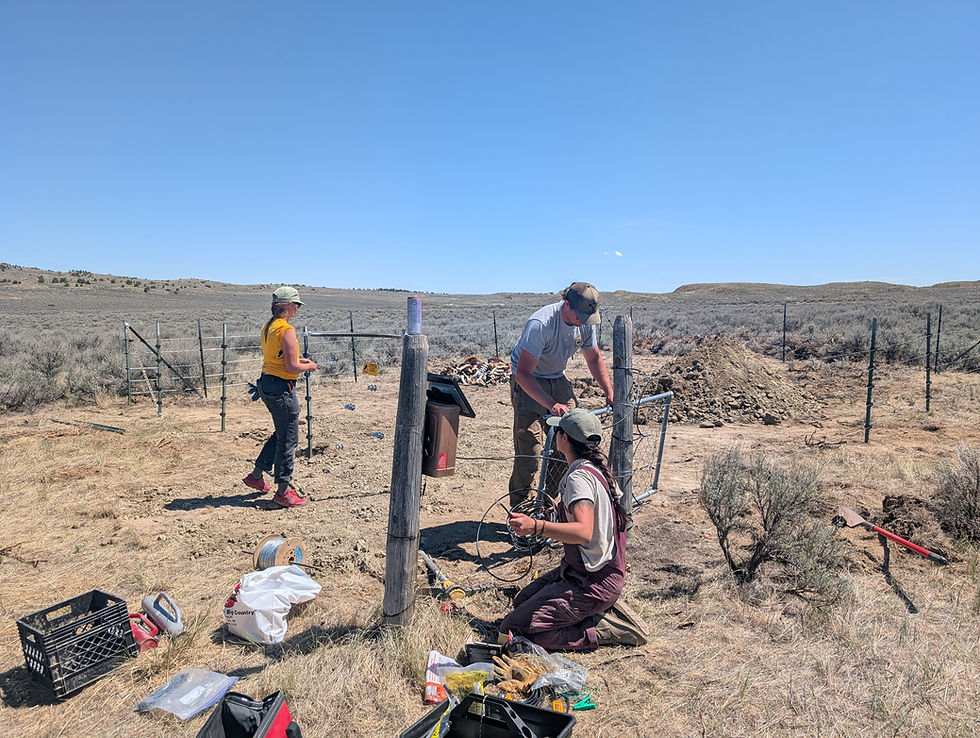
Several sections of relic fence have already been removed from the landscape, and by January 2027, we will have converted all of our fence lines to “wildlife-friendly fencing.” We’re also working on identifying places where ungulates consistently cross property boundaries to access water - allowing Wolf Haven staff to seasonally adjust gate closures based on wildlife use and neighboring cattle operations. One instance of this was when we followed trails of elk who were frequently using an access road at the back of the property. Aerial imagery revealed a low pass between two hills leading toward a neighbor’s pond. The tracks showed us that elk were connecting their feeding grounds to a water source, allowing us to take steps to better conserve this important corridor!
Tracking helps guide habitat restoration, too. Knowing where animals feed, rest, and travel helps Wolf Haven identify portions of the ranch that are especially valuable to wildlife. Rather than treating every acre as ecologically equivalent, we can prioritize areas where restoration will reinforce existing patterns of use, improve resource abundance, and maintain connectivity between important habitats. This approach helps us make the most efficient use of the limited time and resources dedicated to land management on the ranch, which is particularly important for ungulate species who rely heavily on historical migration routes and food resources to survive. For example - we know that skunkbush sumac and cottonwood are the preferred browsing species for mule deer, and we hope to encourage new growth of these plants through our long-term vegetation management plan.

Many animals survive by making themselves difficult to see, whether through camouflage, nocturnal activity, or simply avoiding humans through their behavior and use of cover. As a result, even someone who has lived on a property for decades may never glimpse the majority of the animals who call it home. By interpreting tracks and sign, we get a glimpse into the world of these elusive species and begin to build a more complete picture of who our neighbors are and how they use the landscape. To help collect these findings in a central location, we’ve started "Life of McCleery Ranch” on iNaturalist to catalog the species we find, archive information related to their behavior and seasonality, and share these observations as part of a larger global database that contributes to scientific discovery.
While we’ve yet to see a bear or a badger, we’ve found bear scat and badger digs. We’ve also discovered great horned owl pellets and long-eared owl feathers, as well as countless porcupine foraging sites. These are just a few examples of animals that we now know share the ranch with us, even though we’ve never seen them in the flesh.
Following a pronghorn trail, we also found a freshly laid territorial scrape, which is created when a pronghorn paws at the ground and deposits urine & feces. This suggests a male pronghorn was marking his territory rather than simply passing through, adding another layer to our understanding of how pronghorn use the property throughout the year.
We’ve identified a potential sage-grouse lek (breeding site) as well. Although we rarely see these birds in flight, a large area littered with scat may indicate a place where they congregate to compete for mates. While this observation requires further investigation, it demonstrates how tracking can point us toward vital ecological behaviors that might otherwise go unnoticed.

Land management decisions are often based on regional ecological understanding, coarse-scale vegetation data, and infrastructure needs. Tracking adds another layer of information: an accumulated record of animal behavior written across the landscape at a parcel-level scale. At McCleery Ranch, that information continues to help Wolf Haven make decisions for improving ecological functions for a wide range of wildlife species while still meeting the practical needs of managing the property. It also supports our mission to conserve and protect wolves and their habitat at our satellite sanctuary facility.
Tracking does not answer every question, but it does help Wolf Haven recognize patterns we might otherwise miss, and encourages deeper questions about how the landscape functions. Every track is a small piece of evidence. When those pieces are viewed together, they can reveal how animals use a landscape - and how thoughtful management can help keep its most vital resources protected and connected to the broader ecosystem!
Mark Thompson is a wildlife ecologist and naturalist. His tracking journey began 20+ years ago as a student at University of Montana, but has developed more professionally over the last six years. Mark is certified by Tracker Certification North America as a Tracks & Sign Specialist, and offers workshops and tracking opportunities across Western Washington and Montana through his company, Cambium Ecological. Mark lives at the McCleery Ranch with his partner, Jackie Pagano, who is Wolf Haven’s McCleery Ranch Animal Care & Property Manager.